

Are you looking for a homeopathic cure for swine flu? This article discusses the homeopathy treatment of swine flu along with the best homeopathic medicine for swine flu treatment.
The threat of a global pandemic and evolving homeopathy treatment strategy
Mexican Flu / Spanish Flu / H1N1 Influenza
– Dr. Manish Bhatia
What is Swine Flu / H1N1 Influenza?
Swine Influenza (swine flu) is a respiratory disease of pigs caused by type A influenza virus that regularly causes outbreaks of influenza in pigs. Swine flu viruses cause high levels of illness and low death rates in pigs. Swine influenza viruses may circulate among swine throughout the year, but most outbreaks occur during the late fall and winter months similar to outbreaks in humans.
The 2009 flu outbreak in humans is due to a new strain of influenza A virus subtype H1N1 that derives in part from human influenza, avian influenza, and two separate strains of swine influenza. The origins of this new strain are unknown. It passes with apparent ease from human to human, an ability attributed to an as-yet unidentified mutation. The strain in most cases causes only mild symptoms and the infected person makes a full recovery without requiring medical attention and without the use of antiviral medicines.
Why is there so much panic about Swine Flu? After all it’s just a flu!
The most significant flu pandemic occurred in 1918/1919. The global mortality rate from the 1918/1919 pandemic is not known, but is estimated at 2.5 to 5% of those who were infected died. With 20% or more of the world population suffering from the disease to some extent, a case-fatality ratio this high would mean that about 0.5-1% or 50 million to 100 million people worldwide were killed. In 1957, an Asian flu pandemic infected some 45 million Americans and killed 70,000. Eleven years later, lasting from 1968 to 1969, the Hong Kong flu pandemic afflicted 50 million Americans and caused 33,000 deaths, costing approximately $3.9 billion. In 1976, about 500 soldiers became infected with swine flu over a period of a few weeks.
The scare and panic about the bird flu and swine flu have occurred because people now know what a simple flu can lead to and are afraid of the consequences – not just to the human capital but also to the global financial health.
Homeopathy Remedies for Swine Flu / H1N1 Influenza

Why Homeopathy?
Homeopathy was very successful in dealing with the 1918-19 flu pandemic. Here is a quote from the famous historian Julian Winston:
Perhaps the most recent use of homeopathy in a major epidemic was during the Influenza Pandemic of 1918. The Journal of the American Institute for Homeopathy, May, 1921, had a long article about the use of homeopathy in the flu epidemic. Dr. T A McCann, from Dayton, Ohio, reported that 24,000 cases of flu treated allopathically had a mortality rate of 28.2% while 26,000 cases of flu treated homeopathically had a mortality rate of 1.05%. This last figure was supported by Dean W.A. Pearson of Philadelphia (Hahnemann College) who collected 26,795 cases of flu treated with homeopathy with the above result.
The most common remedy used was Gelsemium, with occasional cases needing Bryonia and Eupatorium reported. Dr. Herbert A. Roberts from Derby, CT, said that 30 physicians in Connecticut responded to his request for data. They reported 6,602 cases with 55 deaths, which is less than 1%. Dr. Roberts was working as a physician on a troop ship during WWI. He had 81 cases of flu on the way over to Europe. He reported, “All recovered and were landed. Every man received homeopathic treatment. One ship lost 31 on the way.”
https://hpathy.com/homeopathy-papers/some-history-of-the-treatment-of-epidemics-with-homeopathy/
Homeopathic Remedies
Considering that the Swine Flu virus produces symptoms similar to the human influenza virus, the following homeopathy medicines may prove useful in cases of swine influenza:
-Gelsemium
Homeopathic medicine for swine flu corresponds to the commencement of the trouble, when the patient is weak, tired and aches throughout the body. It removes speedily the intense aching and muscular soreness.
There is constant chilliness and the patient hugs the fire; the fever is less acute than that of Aconite, and the cough is hard and painful. There are paroxysms of sneezing with excoriating discharge, and great torpor and apathy. Extensive experience with this remedy in the great Epidemic of 1918 proved its usefulness.
Simple cases were speedily cured. Aconite will sometimes prove the better remedy for children, but the drug will never be a prominent one in influenza. Still it may be prescribed when indicated; it will, perhaps, soothe and moderate the subsequent attack, but its action is not quick here as in simple fevers, as we have to deal with a blood affection.
-Baptisia.
Influenza with marked gastro-intestinal symptoms may need this remedy, especially when there are putrid diarrhoea stools.
Clarke considers this remedy the nearest specific for the disease; he prefers the 30th potency. Hughes also praises it, but uses it in the 1x and 2x dilutions, which seem to have more extensive testimony as to their efficacy.
-Eupatorium perfoliatum.
This remedy has much soreness and aching of the entire body; hoarseness and cough, with great soreness of the larynx and upper respiratory tract. Coryza with thirst.
Drinking causes vomiting. The cough is a very shattering one, hurts the head and chest, and as in Drosera, the patient holds the chest with the hands.
The breakbone pains are characteristic of the remedy. Add to these symptoms acute bilious derangements, and it is all the more indicated. Many physicians rely on this remedy in influenza / flu almost exclusively in the early stages.
-Sabadilla
Sneezing is the great keynote of this remedy. Sneezing and lachrymation on going into the open air. The throat is swollen and the pain is worse on empty swallowing; the sneezing is excessive, shaking the whole body.
Shudderings, with gooseflesh chills creeping upwards, are also prominent symptoms. Frontal headache, dryness of mouth, without thirst and cough, worse on lying down, are additional symptoms. It suits well many cases of the catarrhal form of flu; other remedies having sneezing are Cyclamen and Euphorbia.
-Arsenicum
Homeopathic medicine for swine flu covers more phases of flu than perhaps any other remedy. Hughes believes that it will cut short an attack, especially when there is a copious flow, prostration and paroxysmal coryza.
Its periodicity makes it suitable to epidemics, and it suits the early symptoms when the affection is in the upper portion of the respiratory tract. The burning dryness and copious watery excoriating secretion and the involvement of the conjunctiva are unmistakable indications. Langour and prostration are prominent symptoms.
-Arsenicum iodide
Chills, flushes of heat and severe fluent coryza, discharge irritating and corrosive, sneezing and prostration. It corresponds to true influenza and is highly recommended by Hale.
Sanguinaria nitrate is especially valuable when the trachea and larynx are affected. Phytolacca is specific when the throat is inflamed and spotty, with great hardness and tenderness of the glands.
-Dulcamara
This is one of our best remedies in the acute form; the eyes are suffused, the throat is sore and the cough hurts because of the muscular soreness.
If brought on by damp, cold changes in the weather, so much the surer is Dulcamara indicated.
-Bryonia
The trouble here is largely bronchial and going downward. When a person is very grumpy and feels miserable with the flu, wanting only to lie still and be left alone, this remedy is likely to be useful.
Headache, muscle aches, and cough or stomach pain may be the major symptoms. Everything feels worse from even the slightest motion. The person’s mouth usually is dry, with a thirst for large cold drinks.
-Phosphorus
may be indicated, especially when the trouble moves towards the chest. It is a very useful remedy for the debility following la grippe, as it is usually of the pure nervous type. It is the great post-influenza “tonic.”
-Rhus toxicodendron
Influenza, with severe aching in all the bones, sneezing and coughing. The cough is worse evenings and is caused by a tickling behind the upper part of the sternum.
Especially is it useful in cases brought on by exposure to dampness. There is much prostration and depression, and the patient may have some symptoms which are suspicious as pointing towards typhoid fever, such as burning tongue, stupor and delirium.
Aching pains and nightly restlessness are keynotes symptoms. Causticum, like both Rhus and Eupatorium, has a tired, sore, bruised sensation all over the body and soreness in the chest when coughing, but it has in addition involuntary urination when coughing.
-Allium cepa
Profuse catarrhal coryza; the nose runs freely, there is sneezing, irritability cough, the face is swollen and looks inflamed. Camphora. This remedy is often sufficient at the outset to cut short an attack, or at least modify the severity.
-Sticta
Nasal catarrh; headache, thirst, nightly expectoration, great watering of eyes, running at nose, hoarseness of voice, frontal headache and depression of whole system.
Tuberculous subjects attacked by influenza. “There is no better remedy,” says Dr. Fornias,”for the incessant wearing, racking cough of this class of patients.” Tuberculinum is an excellent prevention of recurring attacks of influenza / flu in those who have annual attacks.
-Ipecac
Adapted to cases where the gastric symptoms predominate; tongue clean or slightly coated. Nausea: with profuse saliva; vomiting of white, glairy mucus in large quantities, without relief; sleepy afterwards; worse from stooping.
Low thirst. Cough: dry spasmodic, constricted, asthmatic. Difficult breathing from least exercise; violent dyspnoea, with wheezing and anxiety about the stomach. Cough, with rattling of mucus in bronchi when inspiring; threatened suffocation from mucus. Pains as if bones were all torn to pieces.
-Veratrum album
Adapted to diseases with rapid sinking of the vital forces; complete prostration; collapse. Cold perspiration on the 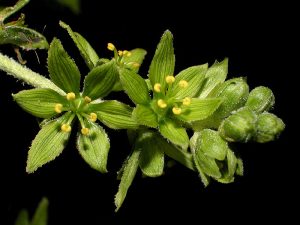 forehead (over entire body, Tab. ) with nearly all complaints. Thirst: intense, unquenchable, for large quantities of very cold water and acid drinks; wants everything cold.
Diarrhoea: frequent, greenish, watery, gushing: mixed with flakes: cutting colic, with cramps commencing in hands and feet and spreading all over; prostrating, after fright; < least movement; with vomiting, cold sweat on forehead during and prostration after. Vomiting: excessive with nausea and great prostration: < by drinking ( Ars. ); by least motion ( Tab. ); great weakness after.
The Current Swine Flu Epidemic or Possible Influenza Pandemic
It has been reported that in the current Swine influenza epidemic, the gastrointestinal symptoms (Nausea, Vomiting) are pronounced. Considering this remedies like Baptisia, Arsenic-album or Ipecac may work as Genus epidemicus or as prophylactic treatment for the current Swine influenza epidemic.
How to differentiate in these flu medicines?
If the patient has mild flu like symptoms (runny nose and watery eyes etc) but no other peculiar symptom but is anxious if it might be swine flu – think about Aconite.
If the flu patient is listless, prostrated, indifferent, has offensive diarrhoea and the parts rested upon feel sore and bruised – think about Baptisia.
If the flu patient is restless, anxious or fearful, thirsty but drinks small quantities and often, prostrated, diarrhoea after eating or drinking and nausea on seeing/smelling food,burning pains – think about Arsenicum-album.
If the nausea is more pronounced, the patient is thirstless and has pain felt in bones – think about Ipecac. Also Ipecac should be thought of if a flu patient is developing or has developed broncho-pneumonia.
If the gastrointestinal symptoms are not marked but the patient has deep pains as if bones are aching – think about Eupatorium perf.
If the flu patient is feeling dull, dizzy, drowsy, has low thirst, feels chilly, esp in back – think about Gelsemium.
Lessons from the 1918/1919 Flu Pandemic
Many people believe that the current virus strain closely matches the 1918/1919 flu pandemic, although it is not exactly like it.
In the 1918/1919 flu pandemic, people without symptoms could be stricken suddenlyand within hours be too weak to walk; many died the next day. Symptoms included ablue tint to the face and coughing up blood caused by severe obstruction of the lungs. In some cases, the virus caused an uncontrollable hemorrhaging that filled the lungs, and patients drowned in their body fluids (pneumonia). In others, the flu causedfrequent loss of bowel control and the victim would die from losing critical intestinal lining and from blood loss.
If such symptoms present themselves in the current pandemic, the remedies that may prove useful would be Arsenic-album, Cantharis, Phosphorus, Cuprum-met, Camphora, Veratrum-album, Ipecac or Carbo-veg.
Ars-alb, Phosphorus, Ipecac and Carbo-veg seem to have a more pronounced action on lungs/respiratory symptoms in the above mentioned symptom group. Cantharis, Phosphorus, and Carbo-veg seem to cover the bloody stools better. Camphor and Verat-alb cover the acute collapse with bluish discoloration better.
Note
Homeopathic remedies need strict individualization and are given as specifically prepared, non-toxic, micro-dose homeopathic potencies. Please consult a qualified homeopath before taking any homeopathic remedy for Swine flu / influenza
Reference for Swine Flu Information
1. Center for Disease Control (CDC), USA
Send us your suggestions, comments and experiences with Swine Flu at [email protected]
Swine Flu / H1N1 Influenza Symptoms
The symptoms of swine flu in people are expected to be similar to the symptoms of regular human seasonal influenza and include fever, lethargy, lack of appetite and coughing. Some people with swine flu also have reported runny nose, sore throat, nausea, vomiting and diarrhea. Symptoms of Swine flu may include all or some of the following:
- Fever
- Muscle aches
- Lethargy
- Coughing
- Headache
- Sore throat
- Runny nose
- Nausea
- Vomiting
- Diarrhea
- Lack of appetite
Complications Of Swine Influenza
Those at higher risk of catching influenza in general include those with the following:
* Age of 65 years or older
* Chronic health problems (such as asthma, diabetes, heart disease)
* Pregnant women
* Young children
But the past epidemics and pandemics of flu have shown that during pandemics most people who succumb are healthy young adults.
Complications of Swine Flu can include:
* Pneumonia
* Bronchitis
* Sinus infections
* Ear infections
* Death
Transmission of Swine Flu (How does Swine Flu spread?)
As with other flu like illnesses, Swine influenza is spread as follows:
- Coughing
- Sneezing
- Kissing
- Touching infected objects
- Touching nose, mouth and/or eyes with infected hands
- Swine flu does not spread by eating pork.
Treatment of Swine Flu / H1N1 Influenza
Swine Flu Vaccination / Swine Flu Shot
The protective ability of influenza vaccines depends primarily on the closeness of the match between the vaccine virus and the epidemic virus, so the presence of non reactive H3N2 SIV variants suggests that current commercial vaccines might not effectively protect pigs from infection with a majority of H3N2 viruses. The current vaccine against the seasonal influenza strain H1N1 is thought unlikely to provide protection. The director of CDC’s National Center for Immunization and Respiratory Diseases said that the United States’ cases were found to be made up of genetic elements from four different flu viruses—North American swine influenza, North American avian influenza, human influenza A virus subtype H1N1, and swine influenza virus typically found in Asia and Europe.
What You Can Do to Prevent H1N1 Influenza / Swine Flu?
There are everyday actions people can take to stay healthy.
* Cover your nose and mouth with a tissue when you cough or sneeze. Throw the tissue in the trash after you use it.
* Wash your hands often with soap and water, especially after you cough or sneeze. Alcohol-based hands cleaners are also effective.
* Avoid touching your eyes, nose or mouth. Germs spread that way.
* Try to avoid close contact with sick people.
* Influenza is thought to spread mainly person-to-person through coughing or sneezing of infected people.
* If you get sick, CDC recommends that you stay home from work or school and limit contact with others to keep from infecting them.
Above all. Don’t get stressed by the fear of getting the swine flu. Stress can undermine your immune system. The flu doesn’t kill everyone and in most cases may prove benign. Mild exercise, meditation or yoga and healthy nutritious diet can help keep your immune system in good condition and able to ward of any infections. Not every ‘infection’ becomes a full blown ‘disease’. Most infections are taken care of by your body even before you know that you were infected. Most infections affect gravely those people who are vitally deranged. So instead of panicking about the flu, stay calm and focus on becoming a healthy ‘you’.
Swine Flu Updates from WHO
29/04/2009 – The human swine flu outbreak continues to grow in the United States and internationally. Today, CDC reports additional cases of confirmed swine influenza and a number of hospitalizations of swine flu patients. Internationally, the situation is more serious too, with additional countries reporting confirmed cases of swine flu. In response to the intensifying outbreak, the World Health Organization raised the worldwide pandemic alert level to Phase 4. A Phase 4 alert is characterized by confirmed person-to-person spread of a new influenza virus able to cause “community-level” outbreaks.” The increase in the pandemic alert phase indicates that the likelihood of a pandemic has increased.
30/04/2009 – WHO raised the pandemic threat level to 5. Phase 5 is characterized by human-to-human spread of the virus into at least two countries in one WHO region. While most countries will not be affected at this stage, the declaration of Phase 5 is a strong signal that a pandemic is imminent and that the time to finalize the organization, communication, and implementation of the planned mitigation measures is short.
As of 29 April 2009, nine countries have officially reported 148 cases of swine influenza A/H1N1 infection. The United States Government has reported 91 laboratory confirmed human cases, with one death. Mexico has reported 26 confirmed human cases of infection including seven deaths. The following countries have reported laboratory confirmed cases with no deaths – Austria (1), Canada (13), Germany (3), Israel (2), New Zealand (3), Spain (4) and the United Kingdom (5).
01/05/2009 – From now on WHO will refer to the new influenza as influenza A(H1N1). This step has been taken probably because, though the new virus has some strains of swine flu virus, it is a mixed virus with strains from bird flu virus and human influenza virus. Added to that it does not seem to affect pigs! For all these reasons there has been some reported outcry by piggery owners to call this new influenza ‘Swine’ Flu!
As of 1 May 2009, 13 countries have officially reported 367 cases of influenza A(H1N1) infection.
The United States Government has reported 141 laboratory confirmed human cases, including one death. Mexico has reported 156 confirmed human cases of infection, including nine deaths.
The following countries have reported laboratory confirmed cases with no deaths – Austria (1), Canada (34), China, Hong Kong, Special Administrative Region (1), Denmark (1), Germany (4), Israel (2), Netherlands (1), New Zealand (4), Spain (13), Switzerland (1) and the United Kingdom (8).
02/05/2009 — As of 2 May 2009, 16 countries have officially reported 658 cases of influenza A(H1N1) infection.
Mexico has reported 397 confirmed human cases of infection, including 16 deaths. The higher number of cases from Mexico in the past 48 hours reflects ongoing testing of previously collected specimens. The United States Government has reported 160 laboratory confirmed human cases, including one death.
The following countries have reported laboratory confirmed cases with no deaths – Austria (1), Canada (51), China, Hong Kong Special Administrative Region (1), Costa Rica (1), Denmark (1), France (2), Germany (6), Israel (3), Netherlands (1), New Zealand (4), Republic of Korea (1), Spain (13), Switzerland (1) and the United Kingdom (15).
03/05/2009 — As of 3 May 2009, 18 countries have officially reported 898 cases of influenza A(H1N1) infection.
Mexico has reported 506 confirmed human cases of infection, including 19 deaths. The higher number of cases from Mexico in the past 48 hours reflects ongoing testing of previously collected specimens. The United States Government has reported 226 laboratory confirmed human cases, including one death.
The following countries have reported laboratory confirmed cases with no deaths – Austria (1), Canada (85), China, Hong Kong Special Administrative Region (1), Costa Rica (1), Denmark (1), France (2), Germany (8), Ireland (1), Israel (3), Italy (1), Netherlands (1), New Zealand (4), Republic of Korea (1), Spain (40), Switzerland (1) and the United Kingdom (15).
For the first time, the virus has now spread from humans to pigs. In Canada more than 200 pigs on a central Alberta hog farm have been infected with human swine flu.
04/05/2009 — As of 4 May 2009, 21 countries have officially reported 1085 cases of influenza A (H1N1) infection.
Mexico has reported 590 laboratory confirmed human cases of infection, including 25 deaths. The United States has reported 286 laboratory confirmed human cases, including one death.
The following countries have reported laboratory confirmed cases with no deaths – Austria (1), Canada (101), China, Hong Kong Special Administrative Region (1), Costa Rica (1), Colombia (1), Denmark (1), El Salvador (2), France (4), Germany (8), Ireland (1), Israel (4), Italy (2), Netherlands (1), New Zealand (6), Portugal (1), Republic of Korea (1), Spain (54), Switzerland (1) and the United Kingdom (18).
07/05/2009 — As of 7 May 2009, 23 countries have officially reported 2099 cases of influenza A(H1N1) infection.
Mexico has reported 1112 laboratory confirmed human cases of infection, including 42 deaths. The United States has reported 642 laboratory confirmed human cases, including two deaths.
The following countries have reported laboratory confirmed cases with no deaths – Austria (1), Canada (201), China, Hong Kong Special Administrative Region (1), Colombia (1), Costa Rica (1), Denmark (1), El Salvador (2), France (5), Germany (9), Guatemala (1), Ireland (1), Israel (4), Italy (5), Netherlands (1), New Zealand (5), Portugal (1), Republic of Korea (2), Spain (73), Sweden (1), Switzerland (1) and the United Kingdom (28).
09/05/2009 — As of 9 May 2009, 29 countries have officially reported 3440 cases of influenza A(H1N1) infection.
Mexico has reported 1364 laboratory confirmed human cases of infection, including 45 deaths. The United States has reported 1639 laboratory confirmed human cases, including two deaths. Canada has reported 242 laboratory confirmed human cases, including one death.
The following countries have reported laboratory confirmed cases with no deaths – Argentina (1), Australia (1), Austria (1), Brazil (6), China, Hong Kong Special Administrative Region (1), Colombia (1), Costa Rica (1), Denmark (1), El Salvador (2), France (12), Germany (11), Guatemala (1), Ireland (1), Israel (7), Italy (6), Japan (3), Netherlands (3), New Zealand (5), Panama (2), Poland (1), Portugal (1), Republic of Korea (3), Spain (88), Sweden (1), Switzerland (1) and the United Kingdom (34).
16/05/2009 — As of 16 May 2009, 36 countries have officially reported 8451 cases of influenza A(H1N1) infection.
Mexico has reported 2895 laboratory confirmed human cases of infection, including 66 deaths. The United States has reported 4714 laboratory confirmed human cases, including four deaths. Canada has reported 496 laboratory confirmed human cases, including one death. Costa Rica has reported nine laboratory confirmed human cases, including one death.
The following countries have reported laboratory confirmed cases with no deaths – Argentina (1), Australia (1), Austria (1), Belgium (2), Brazil (8), China (4), Colombia (11), Cuba (3), Denmark (1), Ecuador (1), El Salvador (4), Finland (2), France (14), Germany (14), Guatemala (3), Ireland (1), Israel (7), Italy (9), Japan (4), Netherlands (3), New Zealand (9), Norway (2), Panama (43), Peru (1), Poland (1), Portugal (1), Republic of Korea (3), Spain (100), Sweden (2), Switzerland (1), Thailand (2), and the United Kingdom (78).
21/05/2009 — As of 21 May 2009, 41 countries have officially reported 11034 casesof influenza A(H1N1) infection, including 85 deaths.
01/06/2009 — As of 1 June 2009, 62 countries have officially reported 17410 cases of influenza A(H1N1) infection, including 115 deaths.
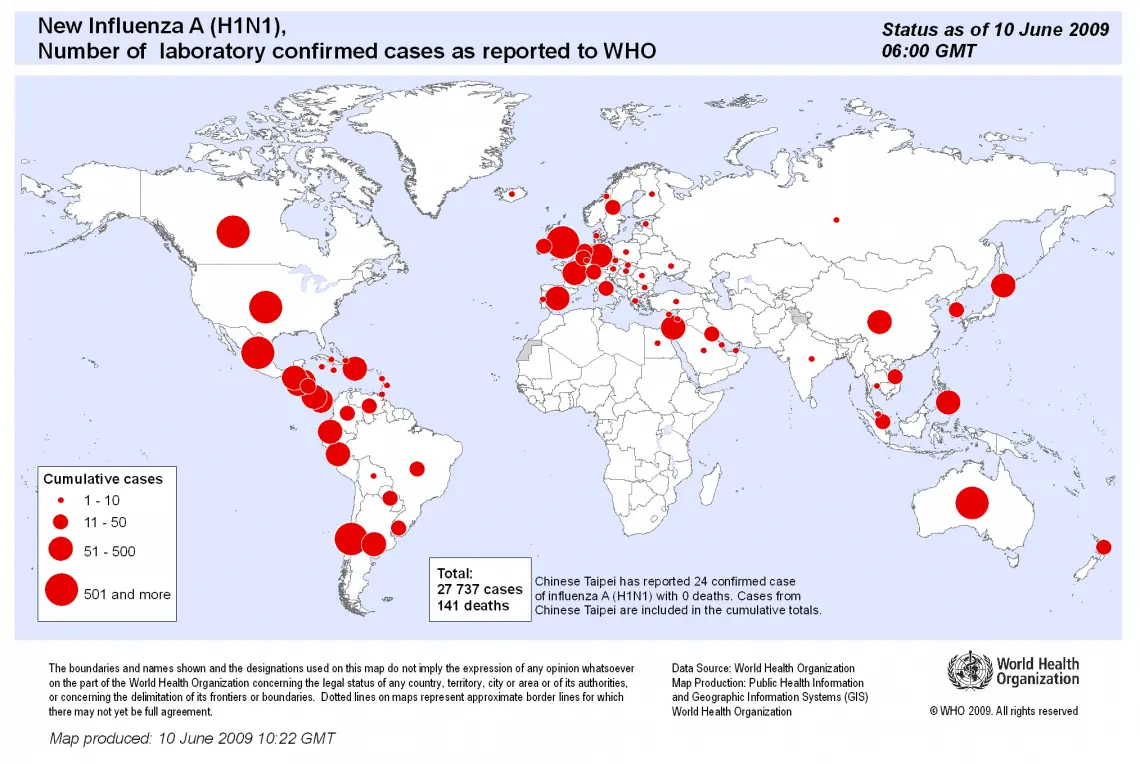
10/06/2009 — As of 10 June 2009, 74 countries have officially reported 27,737 cases of influenza A(H1N1) infection, including 141 deaths.
The breakdown of the number of laboratory-confirmed cases by country is given in the following map.
Map of the spread of Influenza A(H1N1): number of laboratory confirmed cases and deaths
26/06/2009 — As of 26 June 2009, the H1N1 influenza pandemic has affected 59,814people, including 263 deaths.
07/08/09 — As of 31 of July 2009, 168 countries and overseas territories/communities have reported at least one laboratory confirmed case of pandemic (H1N1) 09. All continents are affected by the pandemic.
The countries and overseas territories/communities that have newly reported their first pandemic (H1N1) 2009 confirmed case(s) since the last web update (27 July 2009) as of 31 July 2009 are: Azerbaijan, Gabon, Grenada, Kazakhstan, Moldova, Monaco, Nauru, Swaziland, Suriname. Globally 162380 confirmed cases of H1N1 Influenza and 1154related deaths have been reported so far. There must be many times more unconfirmed cases. This indicates that the mortality rate of the H1N1 influenza is not significantly different from the normal seasonal flu but the lack of awareness of this fact is making people panic the world-over.
User Feedback
For the type of 1918 flu epidemic we need to use the ophidia group remedies because the rapidity of symptoms, hemorrhages and severeity of prostration- all reflect the totality of a snake remedy picture -most prominently Crot-h because in that epidemic those who were normal on getting up in the morning collapsed and were dead by the evening.
Among the other remedies Sarcolactic acid needs consideration where the following are prominent either during or after the attack.
Your Sincerely,
Dr.V.T.Yekkirala
Hyderabad
———————————-
Hi I have had many symtoms of the swine flu and what I experienced was mucus down the back of the throat. Within 2 days I coughed and I experienced a burning pain deep deep in the lung. I thought wow that was strange. The cough got worse and worse. the Burning continued. I took my special cough blend of many ususal cough remedies and there was not a change.
A friend of mine said her sister took Sepia 200c and it cured her symptoms. But did not work for me. so I did a repretory of my symptoms. Sepia came up! But Nat-m was also in the top selection. That was the ticket. Nat-m 200c need to take it 2 times a day for 4 days and then as needed for the next 2 weeks. I have heard sepia is also working.
be well
Linda
———————————-
Thank you for your latest piece on Swine Flu, it is thoughtful, well researched and clearly presented. As a professional homeopath I greatly appreciate the way that you wrote a piece that is helpful to professionals & laypeople alike. Have you considered the remedyPelargonium sidoides? I find it extraordinarly helpful in flu/cold situations with symptoms similar to this Swine Flu, but of course have not had the opportunity to test it with this flu. It was once a leading TB remedy.
Best from
ELD
———————————-
Hello,
I just read the article on the Swine Flu and want to thank you for writing such a great and helpful article. I am not worried about the flu reaching fatal pandemic proportion but the information in the article was nevertheless very appropriate, scientifically based and greatly needed in the homeopathic community. If things should become worse, then I will have readily available information to help clients.
Thank you again for all your great work!
Claude Lainesse
———————————-
I am so happy to see your organization taking a proactive response to the current Swine flu situation. I have been using Anas Barbariae C200 for several years for flu. Will this be of value with this flu. The symptoms seem to be the same.
I would appreciate an opinion very much.
Thanks, and keep up your good work.
Best,
John Board
———————————-
Send us your suggestions, comments and experiences with Swine Influenza at [email protected]
The above information about homeopathy treatment of swine flu is only for information purpose. Please consult a professional homeopath before taking any homeopathic medicine for swine flu.


i READ THAT THE SWINE FLU — WHICH IS ACTUALLY THE 1918 SPANISH FLU — H1N1…. WAS CURED IN MOST CASES WITH GELSEMIUM AND BRYONIA…. FAUCI AND FRIENDS RESURRECTED THIS DANGEROUS FLU IN THE LAB …..AND HAVE RELEASED ITK