
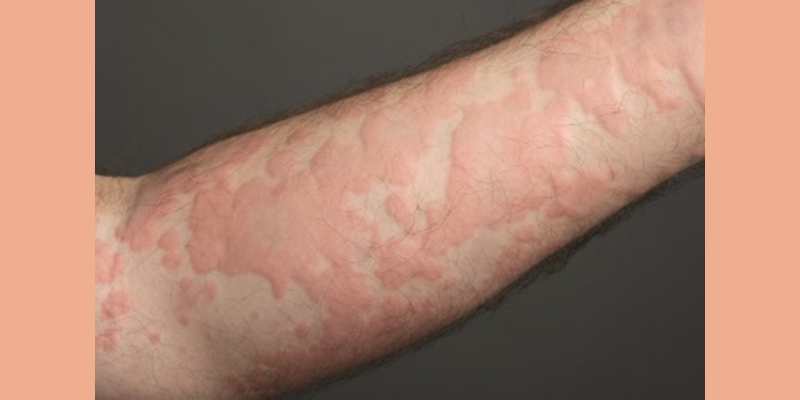

Hives (medically known as urticaria) are red, itchy, raised areas of skin that appear in varying shapes and sizes. They range in size from a few millimeters to several inches in diameter. Hives can be round, or they can form rings or large patches. Wheals (welts), red lesions with a red “flare” at the borders, are another manifestation of hives. Hives can occur anywhere on the body, such as the trunk, arms, and legs.
Urticaria is frequently caused by allergic reactions; however, there are many non-allergic causes.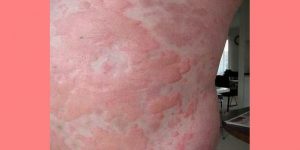 For example, most cases of hives lasting less than six weeks (acute urticaria) are the result of an allergic trigger. Chronic urticaria (hives lasting longer than six weeks) are rarely due to an allergy.
The majority of patients with chronic hives (Homeopathy Treatment for Hives) have an unknown cause. Perhaps as many as 30-40% of patients with chronic idiopathic urticaria will, in fact, have an autoimmune cause. Acute viral infection is another common cause of acute urticaria (viral exanthem). Less common causes of hives include friction, pressure, temperature extremes, exercise, and sunlight. It may be true that hives are more common in those with fair skin.
One hallmark of urticaria is their tendency to change size rapidly and to move around, disappearing in one place and reappearing in other places, often in a matter of hours. Individual hives usually last two to 24 hours
Homeopathic treatment for Urticaria
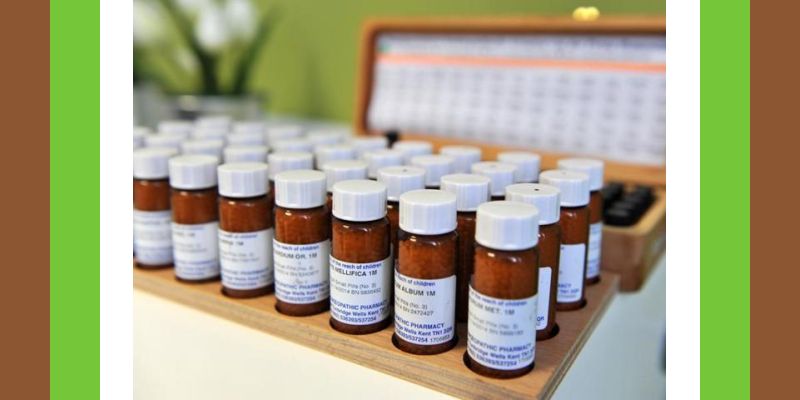
Homeopathy treats the person as a whole. It means that homeopathic treatment focuses on the patient as a person, as well as his pathological condition. The homeopathic remedies for urticaria are selected after a full individualizing examination and case-analysis, which includes the medical history of the patient, physical and mental constitution etc. A miasmatic tendency (predisposition/susceptibility) is also often taken into account for the treatment of chronic conditions. The homeopathic remedies for urticaria given below indicate the therapeutic affinity but this is not a complete and definite guide to the homeopathy treatment of urticaria. The symptoms listed against each medicine may not be directly related to this disease because in homeopathy general symptoms and constitutional indications are also taken into account for selecting a remedy. To study any of the following remedies in more detail, please visit our Materia Medica section. None of these medicines should be taken without professional advice.
Homeopathic Remedies for Urticaria
• Apis.
• Arsenicum album.
• Bovista.
• Chloral hydrate.
• Dulcamara.
• Formica rufa.
• Hepar sulphur.
• Nat.mur.
• Nux vomica.
• Pulsatilla.
• Rhus toxicodendron.
• Sepia.
• Sulphur.
• Urtica urens.
Description of homeopathic remedies for urticaria.
APIS MELL.
The characteristic of urticaria is the stinging & itching as if from bee stings. The itching is always worse at night. The urticaria may consist of isolated elevations which are quite painful & tender to touch; these later become purple or livid. There is slight fever & heat of skin, accompanying urticaria. There is burning pain.
Generalized anasarca as a strong concomitant to the urticaria. Change of weather, warmth, & exercise cause troublesome itching & burning urticaria. The urticaria is worse during both chill as well as fever. The urticaria sometimes accompanies asthmatic troubles.
Adapted to the strumous constitution; glands enlarged, indurated; scirrhous or open cancer. Women, especially widows; children and girls who, though generally careful, become awkward, and let things fall while handling them.
ARSENIC ALBUM
Arsenic causes urticaria with burning and restlessness. It is also useful for persistence of complaints during recession of the urticaria. The urticaria may occur after eating shellfish. Urticaria gets worse at the sea-shore and due to sea bathing.
Great Prostration, with rapid sinking of the vital forces; fainting. The disposition is:
a. Depression, melancholy, despairing, indifferent.
b. Anxious, fearful, restless, full of anguish.
c. Irritable, sensitive, peevish, easily vexed.
The greater the suffering the greater the anguish, restlessness and fear of death. Mentally restless, but physically too weak to move. Indicated by its periodicity and time aggravation: after mid-night, and from 1-2 a.m. And by its intense restlessness, mental and physical: its anxiety and prostration.
BOVISTA
The urticaria of bovista covers nearly the whole body. There is burning, itching of a type which is not relieved by scratching and comes on more at night. Urticaria which is caused by tar: the itching is worse on getting warm. Urticaria with a disposition to diarrhea. Each stool is followed by tenesmus. The other concomitant symptoms of urticaria are scorbutic gums. Inflammation of the eyes, metrorrhagia and various mental symptoms.
Persons who suffer from tettery eruptions, dry or moist. Adapted to old maids with palpitation. Stammering children. Discharge from nose and all mucous membranes very tough, stringy, tenacious. Usually deep impression on finger, from using blunt instruments, scissors, knife, etc. Intolerance of tight clothing around the waist. Sweat in axilla, smells like onions.
CHLORAL HYDRATE
The urticaria of chloral hydrate is characterised by its periodicity. It disappears by day and comes on by night with such intense itching as to prevent sleep.
DULCAMARA
Hives come on at night, especially when the nights are cool, with heavy dew, after a hot day or when weather changes from warm to cool and damp; urticaria with violent cough and oedema of glands; feverish urticaria, obliging one to scratch and burning after scratching, every eruption being preceded by sensation of pricking over whole body; eruption of white, irregular blotches raised upon the skin, surrounded with red areola, appearing in warmth, and disappearing in cold and extremities, face, chest and back, violently itching and burning after scratching, headache, want of appetite; nausea, bitter taste, vomiting, intense aching in pit of stomach and praecordial region, restlessness and sleeplessness, night-sweats turbid, dark urine, diarrhea, pains in limbs. Urticaria from gastric disorders.
Aggravation of sufferings, chiefly in the evening or at night, an during repose, better by movement. Pains with coldness of the body.
NAT. MUR.
The skin of nat-mur is characteristically dirty, unhealthy and greasy, with a yellowish colour. There is great rawness and soreness of the skin, beginning at the feet and gradually ascending. Urticaria around joints with great itching, especially above the ankles. Eruptions itch, smart and burn after exposure to cold damp air, near the seashore and in intermitent fever. Itching is particularly worse from physical exercise. Urticaria may even be over the whole body with large red intensely itching blotches.
For the anaemic and cachectic, whether from lots of vital fluids- profuse menses, seminal losses- or mental affections. Great emaciation; losing flesh while living well. Throat and neck of children emaciate rapidly during summer complaint. Great liability to take cold. Irritability: child cross when spoken to; crying from slightest cause; gets into a passion about trifles, especially when consoled with. Awkward , hasty, drops things from nervous weakness. Marked disposition to weep; sad weeping mood, without cause, but consolation from others <. her troubles.
PULSATILLA
Hives of gastric or uterine origin. Urticaria from pastries or pork or delayed menses. Urticaria with diarrhea, itching is worse night. Patient is chilly all the time, even in a warm room.
Adapted to persons of indecisive, slow, phlegmatic temperament; sandy hair, blue eyes, pale face, easily moved to laughter or tears; affectionate, mild, gentle, timid, yielding disposition- the woman’s remedy. Weeps easily: almost impossible to detail her ailments without weeping.
RHUS-TOX
Vesicular urticaria from getting wet, during rheumatism, with chills and fever, worse in cold air. Patient has itching all over; worse on hairy parts with burning after scratching.
Adapted to persons of rheumatic diathesis; bad effects of getting wet, especially after being over-heated.
SEPIA
Chronic urticaria with burning, stitching and itching which gets worse on exposure to open air. The urticaria first appears on face, neck and forearms and then gradually spreads over the whole body. The attacks are preceded by nausea and pressing headache with face swollen as in erysipelas. Urticaria on upper body breaks out in cold air and disappears in a warm room. Eruption in the form of wheals as if due to blows with a whip or rod.
Adapted to persons of dark hair, rigid fibre, but mild and easy decomposition.
SULPHUR
The urticaria of sulphur is found on the face, arms, on back of hands, neck and lower extremities. Urticaria with fever. Itching urticaria over the whole body, hands and feet. Eruptions alternate with other complaints. There is voluptuous itching which is worse at night, worse when in bed and worse after scratching and washing. Scratching is followed by burning.
Adapted to persons of a scrofulous diathesis, subject to venous congestion; especially of portal system. Persons of nervous temperament, quick motioned, quick tempered, plethoric, skin excessively sensitive to atmospheric changes. For lean, stoop-shouldered persons who walk and sit stooping like old men. Standing is the worst position for sulphur patients; they cannot stand; every standing position is uncomfortable. Dirty, filthy people, prone to skin affections. Aversion to being washed; always <. after a bath.
URTICA URENS
Itching and burning of the skin as if scorched; raised red blotches; fine stinging points; pale rash requiring constant rubbing; consequences of suppressed urticaria; eruption and itching disappears as soon as she lies down and reappear immediately afterrising. There is oedema of the face, chest and limbs without inflammation. Urticaria affects patient every year in the same season. Site of urticaria is face, arms, shoulders, scalp. Vomitting and diarrhea from suppression of urticaria.
Homeopathic remedies for urticaria hives. Natural and effective homeopathy treatment for acute hives and chronic urticaria.
Types of Urticaria
Acute urticaria
It usually show up a few minutes after contact with the allergen and can last a few hours to several weeks. Food allergic reactions often fit in this category. The most common food allergies in adults are shellfish and nuts. The most common food allergies in children are shellfish, nuts, peanuts, eggs, wheat, and soy. It is uncommon for patients to have more than 2 true food allergies. A less common cause is exposure to certain bacteria, such as streptococcus or possibly Helicobacter pylori. In these cases, the hives may be exacerbated by other factors.
Chronic urticaria
It refers to hives that persists for 6 weeks or more. There are no visual differences between acute and chronic urticaria. Some of the more severe chronic cases have lasted more than 20 years. A survey indicated that chronic urticaria lasted a year or more in more than 50% of sufferers and 20 years or more in 20% of them. Of course this does mean that in almost half the people it clears up within a year and in 80% it clears up within 20 years or less.
Drug-induced urticaria
It has been known to result in severe cardiorespiratory failure. The anti-diabetic sulphonylurea glimepiride (trade name Amaryl), in particular, has been documented to induce allergic reactions manifesting as urticaria. Other cases include dextroamphetamine, aspirin, penicillin, clotrimazole, sulfonamides and anticonvulsants.
Physical urticarias
They are often categorized into the following:
• Aquagenic: Reaction to water (exceedingly rare)
• Cholinergic: Reaction to body heat, such as when exercising or after a hot shower
• Cold (Chronic cold urticaria): Reaction to cold, such as ice, cold air or water – worse with sudden change in temperature
• Delayed Pressure: Reaction to standing for long periods, bra-straps, elastic bands on undergarments, belts
• Dermatographic: Reaction when skin is scratched (very common)
• Heat: Reaction to hot food or objects (rare)
• Solar: Reaction to direct sunlight (rare, though more common in those with fair skin)
• Vibration: Reaction to vibration (rare)
• Adrenergic: Reaction to adrenaline / noradrenaline (extremely rare)
Causes of Urticaria
EXOGENOUS CAUSES
INSECT BITES
• Nettles, wasps, bugs, caterpillars.
PLANTS
• Nettles.
• Exposure to extremes of heat and cold, sun.
ENDOGENOUS CAUSES
FOODS
• Fish, prawns, eggs, strawberry, masroom.
• Food preservatives.
• Artificial colours.
DRUGS
• Salicylates.
• Bromides.
• Iodides.
• Focal sepsis
PARASITES
• Round worm.
• Tape worm.
• Hook worm.
• Hydatid disease.
• Filariasis.
PSYCHOGENIC
• Emotional stress.
• Over-exertion.
SYSTEMIC DISEASES
• Rheumatiod Arthritis
• Systemic Lupus Erythmatous
CLINICAL FEATURES
ONSET
• Abrupt.
LOCATION
• Any part of skin may be affected.
• Mucous membranes of lips, mouth, pharynx, larynx.
• May be localised or generalised.
SYMPTOMS of Urticaria
• Intense itching.
• Burning.
• Sense of heat.
LESION
• Starts as red erythematous macules.
• Soon paleoedematous wheals develop.
• Irregular, asymmetrical.
• Velvetty to touch.
• Erythema well defined, fades on pressure.
• Subside within few hours without leaving any trace.
• Dermographism positive.
• Wheals develop along line of scratching or pressure.
COMPLICATIONS
• Angioneurotic oedema.
• Onset: sudden.
• Swelling of skin, mucous membranes.
• Common sites involved: eyelids, tongue, lips, glottis, genitalia, trunk, hands, feet.
• Wheals large, extensive.
• Lasts from few hours to few days.
GENERAL MANAGEMENT of URTICARIA
• Reassurance.
• Identify and eliminate offending agent.
• Correct underlying cause.
• Avoid precipitating causes.
• During acute attack:
o Simple, bland diet.
o Avoid tea, coffee, alcohol.
Urticaria Cases Cured with Homeopathic Medicine
A Case Of Urticaria And Atopic Dermatitis – by Petr Zacharias
A Case of Urticaria – by Surabhi Chitre
Chronic Idiopathic Urticaria – by Zilika Jain



This article was very helpful and gives me hope for my son. Thanks.
How is your son doing? I also was reading this for my son.
This artical is very helpful of begners dr.
May I request any willing dr. To help me in getting a cure for my wife who is now 60 years old suffering from this idiopathic chronic urticaria for almost a year without a permanent cure. For the one year she has been treated with allopathic,homeopathy .siddah and ayurvedic. She is now forced to take steroids along with antihistamines. Few months back she was responding to ayurvedic treatment. But to our surprise this medicines also do not work. We tried homeopathy medicines under all leading homo practioners, but she could not get cure though she is believing in homeopathy. Now it has become challenge in the later part of the life. Doctors say that taking steroids will land her in problems, but she could not find other remedies.
Expecting some guidance from experts who have handled urticaria cases. We are Indians from south India now on a visit to US.
God bless all
Kalyanasundaram
Sa
you please contact me i will cure you complete if you come to pondicherry once tomy hospice that is clinic this is my phone number 9994226790
Hi dr can you please share number 9880777427
I have chronic hepatitis. would this be the cause of Urticaria
And how do i treat this
Sir my 3 year old daughter is diagnosed with utricia pigmentosa is their cure