


Are you looking for a homeopathic cure for morning sickness? This article discusses the homeopathy treatment of morning sickness along with the best homeopathic medicine for morning sickness treatment.
What is Morning Sickness?
Morning sickness is the most common term used to describe nausea and vomiting during pregnancy. Morning
sickness is a physiological symptom of pregnancy (Homeopathy for Early signs of pregnancy). It is also known medically as ‘Nausea and vomiting of pregnancy’ [NVP]. The most severe form of morning sickness is known as Hyperemesis gravidarum [emesis means vomiting (Homeopathy for Vomiting), gravidarum means pregnancy] where persistent vomiting leads to dehydration and weight loss.
Morning sickness can range from mild, occasional nausea (Homeopathy for Nausea) to severe, continuous disabling nausea with bouts of vomiting. It is estimated to be present in around 50%-80% in the pregnant women as an early sign of pregnancy. More specifically, 28% of pregnant women experience nausea only, while 52% experience nausea and vomiting, 20% of pregnant women will have no symptoms at all. Hyperemesis gravidarum affects between 0.3% – 2% of all pregnancy. How severe the symptoms are, varies from women to women.
There is one positive aspect of morning sickness! Research has shown that women with NVP have fewer chances of abortion and stillbirth than women without NVP.
When does morning sickness start and occur?
Morning sickness usually develops between the 4th and 6th week of pregnancy. In half of the cases it ends by the 14th to 16th week of pregnancy. Some women have nausea and vomiting throughout their entire pregnancy.
Morning sickness can occur any at time of the day, though it usually occurs in the morning, because the blood sugar level is low. The name of this condition is a bit misleading, because many women suffer throughout the day and not just in the morning.
Homeopathy Treatment & Homeopathic Remedies for Morning Sickness:

Homeopathy treats the person as a whole. It means that homeopathic treatment focuses on the patient as a person, as well as his pathological condition. The homeopathic medicines for morning sickness are selected after a full individualizing examination and case-analysis, which includes the medical history of the patient, physical and mental constitution etc. A miasmatic tendency (predisposition/susceptibility) is also often taken into account for the treatment of chronic conditions. The medicines given below indicate the therapeutic affinity but this is not a complete and definite guide to the treatment of this condition. The symptoms listed against each medicine may not be directly related to this disease because in homeopathy general symptoms and constitutional indications are also taken into account for selecting a remedy. To study any of the following remedies in more detail, please visit our Materia Medica section. None of these homeopathic medicines for morning sickness should be taken without professional advice.
Reportorial rubrics:
[Kent] Stomach, Nausea, pregnancy during;
Stomach, Vomiting, pregnancy during
[Murphy] Pregnancy, Morning sickness
[Boericke] Female sexual system. Pregnancy and labor, complaints
during, Morning sickness
Homeopathic Remedies
Ipecacuanha, Nux vomica, Symphoricarpus, Lactic acid, Sepia, Tabacum, Asarum europaeum, Nux moschata, Kreosotum, Pulsatilla, Cocculus indicus, Colchicum,Antimonium crudum, Anacardium orientale, Phosphorus.
Materia Medica
Ipecacuanha:
Constant nausea with profuse saliva in the mouth. Vomiting of white glairy mucus in large quantities, without relief and sleepy afterwards; worse by stooping. Stomach feels as if hanging down. Nausea not better by vomiting.
Nux vomica:
Nausea and vomiting every morning with depression of spirit. Constant nausea. The woman feels as if, she vomits; then she feels much better. Nausea and vomiting after eating. Pain in the stomach two or three hours after eating; with loss of consciousness. Feeling of tightness in the abdomen after a meal; must loosen the clothing. Sour taste in the mouth. Tongue coated thick white. Angry, irritable and impatient patient. Headache associated with vomiting; sensation as if head was immensely become large. Violent vomiting, bilious and sour.
Symphoricarpus:
Homeopathic medicines for morning sickness that has persistent vomiting of pregnancy. Morning sickness. Nausea, worse from any motion.Aversion to all food. Deathly nausea. Continuous retching and vomiting. Better by lying on back and worse by motion. Constipated.
Lactic acid:
During pregnancy; morning sickness, salivation, nausea and vomiting, water brash better by breakfast. Vomiting of pregnancy with thirst and voracious hunger. Nausea, on waking better by eating. During pregnancy; morning sickness, salivation, nausea and vomiting.
Sepia:
Homeopathic medicines for morning sickness that has nausea at the sight or smell of food. Great longing for acids or pickles. Inclination to vomit in the morning, when raising her mouth out. Constipation during pregnancy. Nausea in the morning before eating. Nausea worse lying on side. Eructation like spoiled egg; aversion to meat. Sensation of a lump in the stomach. Heaviness or sensation of a load in the abdomen, especially during motion.
Tabacum:
Nausea during pregnancy, with much spiting. Deathly nausea, giddiness with violent vomiting. Uncovering of abdomen relieves the nausea and vomiting. Sensation as if stomach were hanging down relaxed with nausea. Sudden urging with nausea, vomiting and cold sweat. Vomiting from least movement. Vomiting of fecal matter. Incessant nausea, worse smell of tobacco smoke. Vertigo, increasing to loss of consciousness; relived in open air and by vomiting.
Asarum europaeum:
Nausea in attacks or constant aggravated after eating. Tongue clean. Bread taste bitter. Nausea with aching in forehead, with watery saliva in mouth. Vomiting with great anxiety and violent retching.
Nux moschata:
Nausea and vomiting with pain in abdomen, accompanied by drowsiness and sleepiness. Abdomen enormously distended after every meal. Oversensitive to light, voice, odor and touch
Kreosotum:
Vomiting of pregnancy, usually before the breakfast; sweetish vomiting with ptyalism. Nausea, vomiting of food several hours after eating of sweetish water in the morning in pregnancy of undigested food.
Pulsatilla:
Morning sickness with vomiting of mucus. Loathing nausea and retching after greasy food. Nothing tastes good to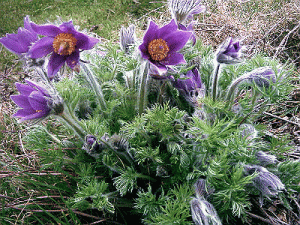 her. Great dryness in the mouth in the morning without thirst. Sensation as if the food were lodged undigested above the stomach. Craves fresh, cool air. Chilly yet aversion to heat. Pressure in the abdomen and back, as from stone. All gone sensation in the stomach; colicky pain; must change her position to relieve pain.
Cocculus indicus:
Homeopathic medicines for morning sickness that has nausea while riding in a boat, cars, carriage, etc. Nausea, worse on becoming or taking cold. Aversion for food. Vertigo on rising up in bed. The thought of food or its smell will nauseate the woman. Aversion to acids, desire for cold drinks. Vomiting with profuse flow of saliva with headache, pain in bowels, on taking cold. Vomiting of sour, bitter and bad odor. Sensation of inner organ emptiness, constriction. Paroxysms of vertigo with nausea. Thirst without desire to drink.
Colchicum:
Nausea and inclination to vomit, caused by swallowing saliva. Nausea from the odor of fat, meat or eggs. Loss of appetite. Brown coated tongue. Nausea and loathing at the thought of food. Extreme aversion to food. Sensitiveness of whole body
Antimonium crudum
Patient with excessive irritability and fretfulness. Vomiting worse by eating or drinking without nausea or relief. Vomiting with white coated tongue. Vomiting as soon as she eats or drinks. Nausea, vomiting and diarrhea during the pregnancy. Tongue coated, like white ash. Longing for the pickles and acids. Aggravation after bathing; taking cold water. Digestive troubles, from overloading stomach. Aversion to be looked at; and to be touched.
Anacardium orientale:
Vomiting of ingesta. Nausea during pregnancy; ameliorated by eating but return and continue until the patient eats again. Nausea, belching. Feels better from vomiting. Empty feeling in stomach.
Phosphorus:
During pregnancy; unable to drink water; sight of it causes vomiting; must close her eyes while bathing. Longs for cold food and drink; juicy, refreshing things; ice cream ameliorates gastric pains. Vomiting as soon as water becomes warm in stomach it is thrown up. Regurgitation of ingesta in mouthfuls. Nausea from placing hands in warm water.
Arsenic album:
Nausea, retching and vomiting after eating and drinking. Ice cold water distresses the stomach and is vomited immediately. Great thirst for cold water; drinks often, but little at a time; eats once but in huge quantity. Can not bear the sight and smell of food.
Physiology of morning sickness:
Morning sickness is an indicator of pregnancy; occurs due to some physiological changes during pregnancy. A number of theories have been suggested for the cause of morning sickness. It seems that the cause of morning sickness is a combination of factors related to the chemical changes during pregnancy.
- It is believed that it is caused by PROGESTERONE, pregnancy dominating hormone. During pregnancy progesterone is secreted in increasing level by ovaries. It has softening effect on the muscular system, which helps to prevent preterm labour, by affecting uterine muscles; also affects other muscles, such as stomach and intestines, making stomach sensitive to discomfort and easier to upset. Progesterone relaxes the working of digestive track; which makes elimination of bodily waste slower, ultimately leading to slow emptying of the stomach; giving rise to excess gastric acid.
- Another theory widely accepted is that morning sickness is caused by hCG {human chorionic gonadotopin} hormone. During pregnancy level of HCG, dramatically rises, peaks, then diminishes from week 5th to 15th week of pregnancy; same time-frame in which morning sickness rises, peaks and diminishes in most cases. The high level of hCG in the bloodstream activates the vomiting center of brain which takes this and other information to decide whether or not to send sickness inducing signals through the vagus nerve to the stomach –the result can be nausea and vomiting.
Symptoms of morning sickness:
Morning sickness itself is a symptom including,
- Nausea
- Vomiting
- Food aversion
- Headache
- Mild heaviness
- Weight loss
Nausea and vomiting are the classical symptoms of morning sickness. All symptoms are not necessarily present in every case.
Conventional Treatment for Morning Sickness
No treatment is needed in most cases, as the symptoms are often mild.
If symptoms are so severe that it interferes with your everyday life, and is stopping you from gaining weight normally or causing weight loss, you should see your GP. You will probably be prescribed an anti-emetic medicine to stop the vomiting.
If you are vomiting a lot, the antihistamine medicine, promethazine, may be given.
In hyperemesis gravidarum (severe vomiting), hospital treatment is often needed to stop the dehydration by giving fluids through an intravenous drip directly into a vein.
Home Tips for morning sickness:
For many women the toughest part of early pregnancy is the morning sickness; it ranges from mild to severe. Guidelines given below may help you to minimize NVP.
- Before getting out of bed, eat a small snack like crackers, biscuit or something else as you like. Rest for a few minutes and then get out of bed slowly.
- Empty stomach can worsen nausea. Take snacks in between meals. Instead of large meal, take small meals.
- Take sufficient rest, avoid stress and fatigue which can worsen the condition.
- Stay hydrated. Drink lots of water and fresh juices.
- Eating lemons gives some relief in nausea for a period. It can be taken after adding salt or sprinkle with a pinch of freshly crushed black pepper. Lemons natural scent has a calming effect on everyone.
- Ginger; taken in a cup of tea, in a syrup form [with or without adding salt] or in a crystallized form can significantly relieve morning sickness if taken for few days.
- Try Acupressure, it may work for some women.
- Eat more protein and cut out on fatty food intake.
- Avoid spicy and fried food.
- Avoid odor and foods which make you feel nauseated.
- Stay in fresh air, avoid warm places. Take a short walk in fresh air, which will make you feel fresh.
These tips may help you to alleviate morning sickness symptoms. If morning sickness gets severe, contact your physician.
The above information about homeopathy treatment of morning sickness is only for information purpose. Please consult a professional homeopath before taking any homeopathic medicine for morning sickness.
Morning Sickness Cases Cured with Homeopathic Medicine
A Case of Infertility in a Woman of 29 – by Shirisha Pulgam
The Cephalopod: Sepia Officinalis – by Atul Rajgurav
Two Cases of Calcium Deficiency Diseases – by Torako Yui
Remarkable Short Stories : Cases To Remember: Part-II – by S.K.Banerjea
Application of David Owen’s Models of Health in Homoeopathic Clinical practice – by Anuradha Rao