
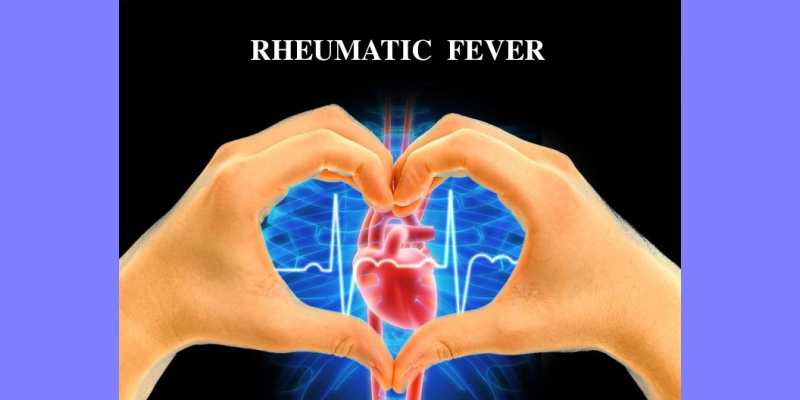


Rheumatic fever systemic, febrile disease that is inflammatory & non-suppurative in nature & variable in severity, duration & sequelae.
It is acute febrile illness following streptococcal sore throat & characterised by fleeting arthritis, pancarditis, leucocytosis & raised ESR.
Following a streptococcal infection the patient will experience the sudden occurrence of fever & joint pain; this is the most common type of onset. Rheumatic fever may occur without any sign or symptom of joint involvement. Acute rheumatic fever usually affects children (5-15years) or young adults.
CAUSATIVE FACTOR of Rheumatic Fever
Rheumatic fever is caused by a streptococcus bacterium belonging to a strain known as lancefirld group A. only a tiny proportion of the population are at risk of getting the disease even if they develop a sore throat from this bacterium, but there is no way of knowing who is susceptible.
A streptococcal sore throat results in the antibodies to antigens, by the immune system, on the surfaces of the streptococci. Both the lining membranes of joints and the lining of the heart carry chemical groups that closely resemble those on the streptococci. The result is that the antibodies attack both the joints and the heart. This is called an autoimmune process. The effect on the heart valves is permanent and may be serious. Heart complications tend to be more severe and develop more quickly where there are poor living conditions, and overcrowding.
PREDISPOSING FACTORS of Rheumatic Fever
• Age: 5-15 years
• Sex: more common in females.
• Malnutrition.
• Genetic predisposition noted.
• Over crowding.
• Poor sanitation.
• Cold weather.
SYMPTOMS of Rheumatic Fever
1) Prodormal phase: Tonsillitis or sore throat 1-4 weeks prior to onset of acute rheumatic fever. Vague prodromata include GROWING PAINS, anorexia, pallor, fatigability & nervous irritability & low grade febrile attacks.
2) Latent period: When antibodies to the preceding streptococcal infection are produced. May vary in length from a few days to several weeks.
3) Phase of onset of acute rheumatic fever.
SYMPTOMS
• History of sore throat over last 2 weeks.
• Fever with chill.
• Sour perspiration.
• Malaise.
• Anorexia.
• Acute excruciating pain in big joints.
• Swelling of joints.
• Fleeting arthritis:– Single joint.
– Seldom involved for more than few days.
– No residual trace or deformity remains.
– Another joint gets involved.
SIGNS
• Pallor.
• Fast pulse.
• Temperature: 38-39’C
• Rheumatic nodules:- small subcutaneous nodules at bony prominences.
• Erythema marginatum on trunk.
• Knee, ankle, elbow joint affected.
• Affected joint red, hot & swollen.
• Affected joint extremely tender.
DIAGNOSIS-(DUCKET JONES CRITERIA) for Rheumatic Fever
One major & two minor, or two major & one minor criteria.
Major criteria
• Carditis.
• Polyarthritis.
• Subcutaneous nodules.
• Erythema marginatum.
• Sydenham’s chorea.
Minor criteria
• Fever.
• Polyarthritis.
• History of rheumatic fever.
• Raised ASO titre.
• Raised ESR, CRP, TLC, prolonged P-R interval.
INVESTIGATIONS for Rheumatic Fever
Blood:
• TLC: raised.
• DLC: increased polymorphs.
• ESR: raised.
• ASO titre: raised.
• CRP: raised.
Throat swab
• Positive for group-A ?-haemolytic streptococcus.
ECG shows sign of
• Conduction defects.
• Myocarditis.
• Pericarditis.
X-Ray joint
• Nothing abnormal.
X-Ray chest
• Cardiac enlargement.
DIFFERENTIAL DIAGNOSIS for Rheumatic Fever
• Juvenile rheumatoid arthritis.
• Acute osteomyelitis.
• Henoch-schonlein purpura.
• Acute poliomyelitis.
• Acute leukaemia.
• Streptococcal tonsillitis.
• Sensitivity reaction.
• Collagen disease.
COMPLICATIONS of Rheumatic Fever
• Sydenham’s chorea.
• Cardiac arrhythmia.
• Pericarditis.
• Congestive cardiac failure.
• Mitral stenosis.
GENERAL MANAGEMENT of Rheumatic Fever
• Complete bed rest till pulse rate & ESR are high.
• Rest to joint by splints, in position of comfort.
• Gradually initiate activity.
• Diet:- maintain nutrition.
• Restriction of physical activity.
TREATMENT of Rheumatic Fever
- The management of rheumatic fever is aimed toward the reduction of inflammation with anti-inflammatory medications such as aspirin or corticosteroids.
- Individuals with positive cultures for strep throat should also be treated with antibiotics.
- Aspirin is the drug of choice and should be given at high doses.
- There may be side effects like gastritis and salicylate poisoning.
- In children and teenagers, the use of aspirin and aspirin-containing products can be associated with Reye’s syndrome, a serious and potentially deadly condition.
Homeopathy Treatment & Homeopathic Remedies for Rheumatic Fever
Homeopathy treats the person as a whole. It means that homeopathic treatment focuses on the patient as a person, as well as his pathological condition. The homeopathic medicines are selected after a full individualizing examination and case-analysis, which includes the medical history of the patient, physical and mental constitution etc. A miasmatic tendency (predisposition/susceptibility) is also often taken into account for the treatment of chronic conditions. The medicines given below indicate the therapeutic affinity but this is not a complete and definite guide to the treatment of this condition. The symptoms listed against each medicine may not be directly related to this disease because in homeopathy general symptoms and constitutional indications are also taken into account for selecting a remedy. To study any of the following remedies in more detail, please visit our Materia Medica section. None of these medicines should be taken without professional advice.
Homeopathic Remedies
- ACONITE
- ANACARDIUM
- ARNICA
- ARSENICUM
- BELLADONA
- BRYONIA
- CACTUS
- DROSERA
- EUPATORIUM PERF.
- FERRUM PHOS.
- GELSEMIUM
- KALMIA
- NUX VOMICA
- RHUS TOX
- SALICYLIC ACID
ACONITE
High fever, dry, hot skin, thirst, redness of the cheeks; shooting or tearing pains, worse at night; redness of shining swelling of the parts affected; pain aggravated by touch; extreme irritability of temper; disposition to uncover the parts, and relief from doing it. Throat red, dry, constricted, numb, prickling, burning, stinging. Tonsils swollen and dry.
Aconite is generally indicated in acute or recent cases occurring in young persons, especially girls of a full, plethoric habit who lead a sedentary life; persons easily affected by atmospheric changes; dark hair and eyes, rigid muscular fibre.
ANACARDIUM
Rheumatic affections of pericardium. Uneasiness in the heart. Piercing pains (stitches) through the region of the heart, quickly succeeding each other, sometimes they extend to the back. Sharp stitches through cardiac region. Stitches being “double”, i.e. one stitch quickly followed by another; then a long interval.
Sudden loss of memory; everything seems to be in a dream; patient is greatly troubled about his forgetfulness; confused unfit for business. Disposed to be malicious, seems bent on wickedness. Irresistible desire to curse and swear. Lack of confidence in himself and others. Feels as though he had two wills, one commanding him to do what the other forbids.
ARNICA
Soreness, numbness, swelling of affected joint. Dreads touch. “Bed too hard”. Worse moving the part. Intercostal rheumatism simulates pleurisy. Worse damp cold weather.
Heart affected, with dilatation and dyspnoea.
Nervous women, sanguine plethoric persons, lively expression and very red face. For the bad effects resulting from mechanical injuries; even if received years ago.
ARSENICUM
Indicated by its periodicity and time aggravation: after midnight, and from 1-2 a.m. And by its intense restlessness, mental and physical: its anxiety and prostration.
A recent very acute case, rapid onset, high fever, pain in knee that kept patient turning and twisting, though every movement provoked cries and both elbows were quickly worn through with the efforts to turn. Mouth and tongue were absolutely dry on waking, and there were night-sweats. Throat swollen, oedematous, constricted, burning; unable to swallow.
Great Prostration, with rapid sinking of the vital forces; fainting. The disposition is:
a. Depression, melancholy, despairing, indifferent.
b. Anxious, fearful, restless, full of anguish.
c. Irritable, sensitive, peevish, easily vexed.
The greater the suffering the greater the anguish, restlessness and fear of death. Mentally restless, but physically too weak to move.
BELLADONA
Joints swollen, red, hot, shining. Exquisitely sensitive to touch or jar. Red streaks radiate from inflamed joint. Recurrent fever with pains attacking nape of neck.
Especially with brain symptoms. Throat dry, as if glazed; angry-looking congestion; RED WORSE ON RIGHT SIDE. Tonsils enlarged; THROAT FEELS CONSTRICTED; DIFFICULT DEGLUTITION; worse, liquids. Sensation of a lump. oesophagus dry; feels contracted. SPASMS in throat. Continual inclination to swallow. Scraping sensation. Muscles of
deglutition very sensitive. Hypertrophy of mucous membrane.
Adapted to bilious, lymphatic, plethoric constitutions; persons who are lively and entertaining when well, but violent and often delirious when sick.
BRYONIA
Shooting, tearing, or tensive pains; shifting pains, which affect the muscles rather than the bones; red and shining swelling and rigidity of the parts affected; parts worse at
night, and on the least movement; profuse perspiration, or coldness and shivering; much heat, with headache and derangement of the stomach; peevish or passionate temper. Throat dryness, sticking on swallowing, scraped and constricted. Tough mucus in larynx and trachea, loosened only after much hawking; worse coming into warm room.
It is best adapted to persons of a gouty or rheumatic diathesis; prone to so-called bilious attacks. Bryonia patients are irritable, inclined to be vehement and angry; dark or black hair, dark complexions, firm muscular fibre; dry nervous, slender people.
CACTUS
Inflammatory rheumatism with heart trouble. Constriction, everywhere. Constriction of the heart, as if an iron band prevented its normal movement; or as if caged. Dryness of tongue, as if burnt; needs much liquid to get food down. Suffocative constriction at throat, with full, throbbing carotids in angina pectoris.
Sanguineous congestions in persons of plethoric habit; often resulting in haemorrhage; sanguineous apoplexy. Fear of death; believes the disease incurable.
DROSERA
Internal chilliness; shivering, with hot face, cold hands, no thirst. Is always too cold, even in bed. Gnawing and shooting in the shafts of the long bones, arms, thighs and legs: with severe stitches in the joints. Ankle bones are specially affected. Pains as if dislocated: great stiffness. “Bed too hard” sensation. Shivering when at rest: when moving, no shivering. Febrile rigor all over body, with heat in face, but cold hands: without thirst. Night-sweats.
EUPATORIUM PERF.
Feels bruised-broken-dislocated. Bones as if broken. Rheumatism with perspiration and soreness of bones.Chills and high fever. Much shivering. Joints especially affected, hip, shoulder, inside knee, foot, great toe, elbow.Sharp pains in hip, ankle and shoulder. Pains worse 10 a.m. to 4 p.m.Wants to keep still, but must move.
FERRUM PHOS.
Acute articular rheumatism; attacking one joint after another; joints puffy, but little red; high fever. Or red, swollen, and very sensitive. Worse from slightest movement.
Throat. Mouth hot; fauces red, inflamed. Ulcerated sore throat. Tonsils red and swollen. Eustachian tubes inflamed. Sore throat of singers. Sub-acute laryngitis with fauces inflamed and red.After operations on throat and nose to control bleeding
and relieve soreness.
GELSEMIUM
Rheumatic pains with heaviness and loss of power in limbs. With trembling. A FEELING AS IF IT WERE NECESSARY TO KEEP IN MOTION, OR ELSE HEART’S ACTION WOULD CEASE. Fever with chills up and down the back. Illness begins in warm weather. WANTS TO BE HELD, BECAUSE HE SHAKES SO. Pulse slow, full, soft, compressible. Chilliness up and down back. Heat and sweat stages, long and exhausting. Dumb-ague, with much muscular soreness, great prostration, and violent headache. NERVOUS CHILLS. Bilious remittent fever, with stupor, dizziness, faintness; thirstless, prostrated. Chill, without thirst, along spine; wave-like, extending upward from sacrum to occiput. Nervous hysterical temperament.
KALMIA
Migratory rheumatism, with the heart affected. Pains extend downwards, and shift suddenly. Often remarkable slowness of pulse. Adapted to acute neuralgia, rheumatism, gouty complaints, especially when heart is involved as a sequel of rheumatism or gout. In heart diseases that have developed from rheumatism, or alternate with it.
NUX VOMICA
“Whole body burning hot, especially face red and hot, yet cannot move or uncover in the least without feeling chilly. “Rheumatic fever: vertigo, chilliness alternating with heat, pains in head, back and limbs; thirst; dry skin; scanty, dark urine; delayed stool.
Evening fever < towards morning. “Lumbago; pains drawing and spasmodic. Must sit turn over. Attacks especially trunks of muscles and large joints; pale tensive swellings.
Worse motion; dread of motion. Worse least jar, and cold. Very chilly; cannot bear to uncover. Better for warmth, hot things, getting warm. Nux is irritable, sullen, surly.
Is worse in dry, better in wet weather.
Nux is chiefly successful with persons of an ardent character; of an irritable, impatient temperament, disposed to anger, spite or deception.
RHUS TOX
Pulse irregular, generally accelerated but weak, soft, sometimes it cannot be felt or is intermittent. Shivering and coldness, generally in evening, and accompanied by paroxysms of pain, and other accessory symptoms. External coldness along skin, coldness, but does not mind cold air. Shivering and shaking in open air, with violent thirst. Pain in chest (often rheumatic), worse by using arms as in making a bed, sweeping, Rheumatic tension, drawing, tearing in limbs, during rest. Excessively cold hands and feet all day. Tearing, burning, or wrenching pains; sensation of weakness and crawling in the affected limb; red, shining swelling of the joints, with rigidity or shootings when touched; pains worse during rest, or in cold, damp weather.
Adapted to persons of rheumatic diathesis; bad effects of getting wet, especially after being over-heated.
SALICYLIC ACID
Acute, inflammatory rheumatism of one or more joints, especially elbows or knees.
Great swelling and redness. High fever. Very sensitive to least jar. Motion impossible

Please give a shortlist if commonly indicated remedies for palindromic rheumatism, a little known syndrome characterised by fleeting and changing inflammation of joints
Thanks sir….