
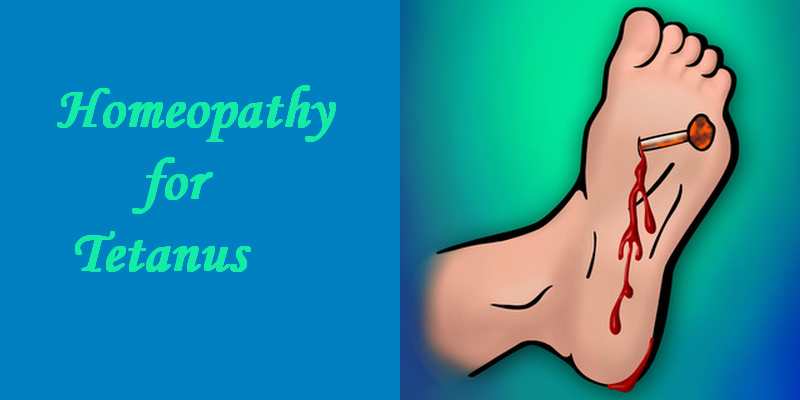

Tetanus is a spastic, paralytic illness also called as “LOCK JAW”
Tetanus is an infection caused by clostridium tetani, bacteria found in almost anything lying on the ground, including the soil, dust and feces of animals.
Causes of tetanus
Bacteria (clostridium tetani) that are manure, or dust. Bacteria may enter through any break in the 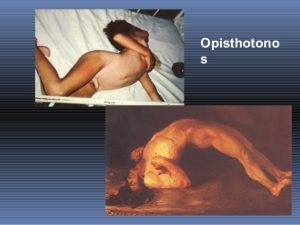 skin, including burns or puncture wounds. The wound can be tiny such as with a splinter. Toxins produced by the bacteria travel to nerves that control muscle contraction, producing muscles spasms and seizures.
Risk factors
- Lack of tetanus immunizations
- New born infants born to non immunized mothers.
- Unclean deliveries.
- Animal bites.
- Ear and nose pricking
- Frostbite and gangrene.
- Use of street drugs with unclean needles and syringes.
- Burns, surgical wounds, and skin ulcers.
- Outdoor work and outdoor sports activities.
Homeopathic treatment for tetanus symptoms
Homeopathy is one of the most popular holistic systems of medicine. The selection of remedy is based upon the theory of individualization and symptoms similarity by using holistic approach. This is the only way through which a state of complete health can be regained by removing all the sign and symptoms from which the patient is suffering. The aim of homeopathy is not only to treat tetanus symptoms but to address its underlying cause and individual susceptibility. As far as therapeutic medication is concerned, several remedies are available to treat tetanus symptoms that can be selected on the basis of cause, sensations and modalities of the complaints. For individualized remedy selection and treatment, the patient should consult a qualified homeopathic doctor in person. There are following remedies which are helpful in the treatment of tetanus symptoms:
Ledum pal – tetanus with twitching of muscles near the wound; indicate din punctured wounds produced by sharp pointed instruments.
Hydrocyanicum acid –This is a homeopathic remedy which is very homeopathic to tetanus. It produces a persistent tonic spasm from its direct action on the spinal cord. It shows itself in the muscles of the face, jaws and back. There is trismus or locked jaw, risus sardonicus and impeded respiration, with lividity and frothing at the mouth; the rigidity is firm, the body is bent backwards, the attack is sudden, and there is less reflex excitability than with the Strychnia case.
Angustura produces a tetanic rigidity of the muscles, a painful stiffness and stretching of the limbs. The lips are drawn back showing the teeth and the jaws are locked.
Cicuta virosa –The action on the nervous system, producing spasmodic affections, viz, hiccough,  trismus, tetanus, and convulsions, give the pathological picture calling especially for this remedy, whenever this is further characterized, by the more individual symptoms of the drug. Among these, are the bending of the head, neck, and spine backwards, and the general action of the patient is violent, with frightful distortions. Violent, strange desires. Sensation of internal chill. Moaning and howling. useful in tetanic convulsions with sudden rigidity and jerking followed by prostration; the characteristic symptoms are the bending of the head, neck and spine backwards. Intense oppression of breathing, lockjaw and the patient becomes violent with frightful distortions.
Nux Vomica –
The leading homeopathic remedy for tetanus. It has tetanic convulsions with opisthotonos,  distortion of eyes and face, with dyspnoea excited by any external impression. Strychnia, the alkaloid of Nux-vomica, produces a perfect picture of tetanus, with its convulsion of muscles renewed by the slightest external impression, its “risus sardonicus,” its respiratory spasm, with blue `cyanosed face and clear mind. The value of Strychnia in tetanus is recognized by Trousseau and Stille, and it is a striking example of Homoeopathy as sometimes practiced by allopaths.
Ignatia suits emotional trismus or opisthotonos.
Physostigma – Here the sensory nerves are irritable; there are tetanic spasms stiffness of spine and legs alternate dilation and contraction of the pupils. This seems to be characteristic.
Carbolic acid has been used with success in tetanus. Phenol has been found to work better than antitetanic serum, which is preserved by phenol. There is no question but that it is a powerful remedy.
Hypericum –Trismus from injury to nerves; it is considered prophylactic in cases of wounds of palms or soles. Especially useful in spinal injuries. It has a growing clinical record in this disease. Dr. Zopfy corroborates the use of Hypericum in tetanus in a practice of sixty years.
Passiflora – has cured tetanus in hot countries, and in horses. It has to be given in large doses. An efficient anti-spasmodic. Whooping-cough. Morphine habit. Delirium tremens. Convulsions in children; neuralgia. Has a quieting effect on the nervous system. Insomnia, produces normal sleep, no disturbance of cerebral functions, neuroses of children, worm-fever, teething, spasms. Tetanus. Hysteria; puerperal convulsions. Painful diarrhśa. Acute mania. Atonic condition generally present
Cuprum – pale face, jerking, opisthotonos,patient loses consciousness with each spasm. Spasmodic affections, cramps, convulsions, beginning in fingers and toes, violent, contractive, and intermittent pain, are some of the more marked expressions of the action of Cuprum; and its curative range therefore includes tonic and clonic spasms, convulsions, and epileptic attacks. Chorea brought on by fright. Nausea greater than in any other remedy. Jerking, twitching of muscles. Coldness of hands. Cramps in palms. Great weariness of limbs. Cramps in calves and soles. Epilepsy; auro begins in knees. Clenched thumbs. Clonic spasms, beginning in fingers and toes.
Stramonium – Tetanic convulsions, spasms of glottis and chest worse from light or touch.Absence of pain and muscular mobility especially of muscles of expression and of locomotion. Loquacious, garrulous, laughing, singing, swearing, praying, rhyming. Sees ghosts, hears voices, talks with spirits. Rapid changes from joy to sadness. Violent and lewd. Delusions about his identity; thinks himself tall, double, a part missing. Religious mania. Cannot bear solitude or darkness; must have light and company. Sight of water or anything glittering brings on spasms. Face Hot, red; circumscribed redness of cheeks. Blood rushes to face; distorted. Expression of terror. Pale face
Aconite – Tetanus, with fever, numbness and tingling from exposure to cold or traumation. The face changes color. A state of fear, anxiety; anguish of mind and body. Physical and mental restlessness, fright, is the most characteristic manifestation of Aconite. Acute, sudden, and violent invasion, with fever, call for it. Does not want to be touched. Sudden and great sinking of strength. Complaints and tension. Fears death but believes that he will soon die; predicts the day. Fears the future, a crowd, crossing the street. Restlessness, tossing about. Tendency to start. Imagination acute, clairvoyance. Pains are intolerable; they drive him crazy.
Pathophysiology of Tetanus
The time between getting the infection and showing symptoms is usually between three and 10 days. But it may be as long as three weeks. The shorter the incubation period the higher the risk factors.
As the bacteria enter into the body it starts multiplying into the cell. Bacterial cell release neurotoxin called tetanospasmin which is responsible for the whole symptomatology.
Tetanospasmin reaches at neuromuscular junction and block the production of substance responsible for muscle relaxation. This results in continuous excitation of muscle with minimal or no relaxation.
Symptoms of Tetanus
- In children and adults muscular stiffness in the jaw is a common first sign of tetanus.
- This symptom is followed by stiffness in the neck, difficulty swallowing, stiffness in the stomach muscles, muscles spasms, sweating, and fever.
- Difficulty breathing
- Urinary retention
- Fever
- New born babies with tetanus are normal at birth, but stop sucking between 3-12 days after birth.
- They stop feeding and their babies become stiff while severe muscle contractions and spasms occur. Death follows in most cases.
Tetanus immunization
Two agents are available. Tetanus immune globulin is a concentrate of antibodies produced against tetanus toxin by immunized people.
Another available agent is tetanus toxoid, which works by making the body produce antibodies to the toxin and protect one from future infections. Since immunity to tetanus wanes with time, periodic boosters are necessary.



Good day sir
A patient is badly hit by tetanus after a thorn pricked him. Ledumpal was given followed by silicea to let expulsion of foreign body. But he himself pricked with a non sterilised needle and then jaw locking occured . Hypericum, nux, acconitum, mag phos were given but the stiffness and pain in spine and shoulder are increased and finally convulsions led the family to admit him in hospital. The tests showed higher magnesium levels. He is being given anesthesia constantly because the jerks resume with consciousness.
Please suggest to save his life he is very innocent.
My email
[email protected]
Regards