


What is vertigo?
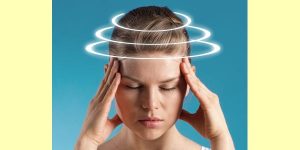 Vertigo is a sensation that everything around is spinning or moving which can be caused due to various medical disorders but specially due to problem in the inner ear and visual complaints.
It is medically different from dizziness, lightheadedness and unsteadiness. It can occur at any time and may last for days, weeks, months and even years.
It is defined as illusion of motion. It is an abnormal perception of movement of the environment occurs as result of mismatch between the information about a person’s position reaching the brain from the eyes, limb and the vestibular system.
The CNS coordinates and integrates sensory input from the visual, vestibular, and proprioceptive systems. Vertigo occurs when there is a mismatch of information from two or more of these systems.
It is divided in to central and peripheral causes. Central vertigo indicates involvement of the cerebellum or the vestibular nuclei within the pons and medulla.
Peripheral vertigo indicates involvement or either the eighth cranial nerve or the vestibular apparatus of inner ear, and is usually benign. Benign positional vertigo, the most common cause of vertigo, results from the inappropriate presence of calcium particles in the semicircular canals.
Movement of the head cause these otoliths to inappropriately trigger receptors in the semicircular canal, causing the sensation of vertigo.
Vertigo caused by labyrinth disorders is usually short lived, though it may recur, whilst vertigo arising from central (brain stem) disorders is often persistent and accompanied by other signs of brain stem dysfunction.
Associated symptoms
Difficulty walking or standing (May even fall suddenly to the ground), relief on lying or sitting still; nausea, vomiting, pallor, sweating.
What is not vertigo?
Faintness may be due to anxiety with associated palpitations, tremors, and sweating. Light headedness may be due to anemia, orthostatic hypotension, or effort in an emphysematous patient. But in all of these there is no illusion of movement or typical associated symptoms. Lost awareness during vertigo should prompt thoughts of epilepsy or syncope.
Causes of vertigo
The causes are divided or classified according to the cause or origin:
Labyrinth and 7th nerve
- Menieres’s disease
- Vestibular neuronitis (i.e. acute labyrinthitis)
- Benign positional vertigo
- Motion sickness
- Trauma
- Ototoxic drugs
- Zoster
Brainstem, cerebellum, cerebello-pontine angle
- Multiple Sclerosis
- Stroke
- Hemorrhage
- Migraine
- Acoustic neuroma
Cerebral cortex
- Vertiginous epilepsy
Alcohol intoxication
The Most Common Causes include:
- Middle ear pathology
- Benign paroxysmal positional vertigo
- Migraine aura
- Bilateral vestibular failure secondary to autoimmune disorder
- Meniere’s syndrome
- Multiple sclerosis
- Migraine
- Vestibular epilepsy
- Posterior circular ischemia
- Spino cerebellar atrophy types 1 – 9
- Friedreiches ataxia
- Vasovagal episodes
- Low cardiac output
- Hyperventilation
Benign paroxysmal positional vertigo
Benign paroxysmal positional vertigo (BPPV) is brief periods of vertigo ( less than one minute ) which occur with change in position. It is the most common cause of vertigo. It occurs in 0.6% of the population yearly with 10% having an attack during their lifetime. It is believed to be due to a mechanical malfunction of the inner ear. BPPV can be effectively treated with repositioning movements.
Vestibular migraine
Vestibular migraine is the association of vertigo and migraines. It is the second most frequent cause of recurrent vertigo with a lifetime occurrence rate of about 1%.
Ménière’s disease
Ménière’s disease frequently presents with vertigo in combination with ringing in the ears, a feeling of pressure or fullness, severe nausea or vomiting, and hearing loss. As the disease worsens, hearing loss will progress.
Vestibular neuritis
Vestibular neuritis presented with severe vertigo. It is believed to be caused by a viral infection of the inner ear. Persisting balance problems may remain in 30% of people affected.
Motion sickness
Motion sickness is one of the biggest symptoms of vertigo and it develops most often in persons with inner ear problems. The feeling of dizziness and lightheadedness is often accompanied by nystagmus. This is when the eyes rapidly jerk to one side and then slowly find their way back to the original position. During a single episode of vertigo, this action will occur repeatedly. Symptoms can fade while sitting still with the eyes closed.
Vertigo Symptoms
Apart from a sense that the head is spinning or the things around are spinning, it may be associated with the following symptoms:
- Hearing loss
- Tinnitus (ringing in ears)
- Otalgia (pain in ears)
- Otorrohoea (discharge from ears)
- Facial weakness
- In coordination
- Clumsiness
- Loss of consciousness
- Olfactory disturbances
Diagnosis
Diagnosis mainly includes:
- Otoscopy
- Pure tone audiometry
- Brain stem auditory evoke response
- Tunning fork tests
- Eve movement examination
- Gait assessment
Homeopathic treatment for vertigo
 Homeopathy is one of the most popular holistic systems of medicine. The selection of remedy is based upon the theory of individualization and symptoms similarity by using holistic approach.
This is the only way through which a state of complete health can be regained by removing all the sign and symptoms from which the patient is suffering.
The aim of homeopathy is not only to treat the presenting disease but to address its underlying cause and individual susceptibility. As far as therapeutic medication is concerned, several remedies are available to treat vertigo that can be selected on the basis of cause, sensations and modalities of the complaints.
For individualized remedy selection and treatment, the patient should consult a qualified homeopathic doctor in person. There are following homeopathic remedies which are helpful in the treatment of vertigo:
Gelsemium, Phosphorous, Cocculus, Conium, Tabaccum, Zincum met, Belladonna, Glonine, Graphites, Natrum sulph, Natrum mur, Nux vomica, Lachesis, Selenium, Theridion, Gratiola, Morphinum, Agaricus, Argentum nit, Calcarea carb, Aconite, Iodium, Pulsatilla, Bromium, Baryta carb and many other medicines.
Conium – this remedy suits especially the vertigo of the aged and that arising from excess and over use of tobacco. Also that from due to cerebral anemia. There is sensation when the person looks steadily at an object as if turning in a circle. Vertigo on rising up or going down stairs, with great debility and inclination to sleep.
Iodine – well marked remedy for old people who suffer from chronic congestive vertigo.
Ferrum met – this remedy suits anemic vertigo, which is worse when suddenly rising from a sitting or lying position. It comes when suddenly rising from a sitting or lying position. It comes on when down hill or on crossing water, even though the water be smooth.
Cocculus – vertigo which is connected with digestive troubles suits this remedy, and it develops into the neurasthenic type with occipital headache and lumbosacral irritation. There is a flushed face and hot head, worse sitting up and riding in a carriage; worse after eating.
Rhus Tox – this remedy suits vertigo, especially in old people, which comes on as soon as the patient rises from a sitting position. It is associated with heavy limbs and is probably caused by senile changes in the brain.
Aesculus – severe vertigo, with reeling, like drunken men; vertigo, with nausea and dimness of sight; confused stupor; thickness of speech; great weakness, with trembling.
Lachesis – stupefaction with loss of consciousness, with blue face and convulsive movements, or tremor of the extremities; or paralysis, especially of the left side; the paroxysms are preceded by frequent absence of mind, or vertigo with rush of blood to the head; blowing expiration; after the use of liquors or mental emotions.
Cyclamen – sudden vanishing of sight; profuse and dark menses; blindness accompanied by semi lateral headache of the temple, with pale face, vertigo; nausea referred to throat and weak digestion.
Ambra grisea – Is especially useful in nervous vertigo in old people.
Iodine – Is also suitable for old people who suffer from chronic congestive vertigo.
Bromine –Has a vertigo worse when looking at runningwater.
Aconite-The vertigo of Aconite is hyperaemic or auditory. It is worse on raising the head or rising from a recumbent position.
Bryonia – Has a gastric vertigo with nausea and disposition to faint,worse on rising from a recumbent position and on motion.
Cinchona – Has a gastric vertigo associated with weakness or anaemia. Also vertigo from debility, looses of fluids, etc.
Nux vomica and Pulsatilla may be needed in gastric vertigo.
Phosphorous, says Dr. William Boericke, “displays great curative powers in every imaginable case of vertigo, especially in nervous vertigo when caused by nervous debility, sexual abuse, occurring in the morning with an empty stomach, with fainting and trembling.”
Causticum – Is suitable to vertigo preceding paralysis. There is a tendency to fall forward or sideways; there is a great anxiety and weakness in the head. It corresponds, therefore, to the vertigo and weakness in the head. It corresponds, therefore to the vertigo of organic brain diseases.
Argentum nitricum –Vertigo, with debility and trembling, is curable by this remedy when there is much mental confusion and a sense of expansion. It seems as if houses would fall on him when he is walking through the street. It also suits vertigo from diseases of the brain and eyes.
Natrum salicylicum –This remedy is especially useful in auditory nerve vertigo, and other remedies for this condition are Chininum sulphuricum, Gelsemium and Causticum.
Theridion – Has a purely nervous vertigo, especially on closing the eyes; it is accompanied with nausea and is greatly intensified by noise or motion.
Vertigo Cases Cured with Homeopathy Medicine
A Case of Vertigo – Dr. A. Kannan
A Case of Vertigo – by Michelle George
A Case of Vertigo – by Beth Knudtsen
Acute Vertigo in a Man of 52 – by Rajiv Peres
A Case of Vertigo and Joint Pain – by B. G. Daptardar
Syncope with Vertigo in a man of 73 – by Chetna Rochani
A Case of Lichen Planus and Vertigo – by Aradhana Chitra
“I Felt My Balance Slipping Away” A Case of Phosphorus – by Tsvetana Kodjabasheva
Chronic Remedy Revealed In Acute Condition – by Tsvetana Kodjabasheva




Dear Doctor,
I am a vertigo patient. My age is 41 running. I am military officer. The symptom started since last 2007. I have carried out a few diagnosis where my two eras are found completely functional. Need some suggestions if I can get some Homeopathy treatment here in Bangladesh on vertigo. If you have any arrangement to see any of your doctor here in Bangladesh on a periodical visit please let me know. Also if you can suggest some diagnosis before prescribing your medicine I am ready to do those.
I am waiting for your kind reply.
With Regards
Khalid Khan
Hi I am nearly 66yrs, my left hand-fingers has blisters under the skin sometimes painful n sometimes look almost normal but it haswhite blotches under the skin other times the blisters appear reddish, how long?probably 10yrs.
I also have vertigo about five years. I am open to visiting a Homeopath, I am in the far north NZ. I can’t take drugs it is too stressful and time consuming.
your time is appreciated,e
Hello,
I have unilateral vestibular hypofuntion due to an ear infection. The vertigo I experience is chronic & leaves me very fatigued. What remedies do you suggest ?
Regards,
Carl Bentall
Dear Dr Manisha,
I feel giddy when I start eating a meal. Not nauseous, just giddy. Can you please help me since I have been suffering from 2 full months now and there has been no respite.